Past & Developing Work — Project 02
Mapusha Weavers Activation and Intergenerational Skills
— ROOIBOKLAAGTE, MPUMALANGA
Supporting an established weaving cooperative to strengthen quality, market access and the transfer of heritage textile skills.
Mapusha Weavers Activation and Intergenerational Skills
Strengthening a heritage weaving cooperative for the next generation
Mapusha Weavers is a long-standing women-led cooperative in Rooiboklaagte whose work carries valuable knowledge of fibre preparation, spinning, dyeing and weaving. The cooperative’s studio also served as the base for Kulani’s first introductory community craft programme, making Mapusha an important part of Kulani’s early development work.
Kulani’s engagement with the group has included product exposure, market support, quality conversations and efforts to create opportunities for younger makers. The relationship has shown both the cultural value of the cooperative’s knowledge and the practical challenges involved in sustaining production, consistency and market readiness over time.
The strongest future opportunity is intergenerational. Experienced weavers can be recognised and paid as teachers while younger participants learn the complete textile journey, rather than only one isolated technique. This would help preserve knowledge by placing it within a living enterprise with contemporary relevance.
Any renewed programme needs a clear governance and funding structure. It should combine skills transfer with production planning, quality control, traceability, product development and dependable routes to market, ensuring that heritage knowledge is respected while the cooperative builds a more sustainable operating foundation.
- 8
- Weavers
- 12
- Trainee Weavers
- Weaving
- Primary Discipline
- 2022-2024
- Programme Period
The Story
Protecting knowledge by making it economically relevant
Kulani’s relationship with Mapusha began through the cooperative’s studio and its role in the Rooiboklaagte introductory programme. The studio offered learners an immediate view of what an established community craft group could look like and created a natural pathway for those who wanted to explore weaving more seriously.
That early work opened opportunities for selected participants to engage with experienced weavers and for Mapusha products to receive wider exposure. It also highlighted the depth of knowledge held by senior artisans, including processes that begin long before a textile reaches the loom.
At the same time, the relationship revealed that market access cannot be separated from internal systems. Consistent product quality, agreed pricing, accurate stock records, realistic production commitments and clear roles all shape whether customers and retail partners can buy with confidence.
Intergenerational training therefore needs to be more than an informal transfer of technique. Experienced weavers should be recognised as skilled teachers, learners need a structured progression, and the programme should document the processes, materials and stories that give Mapusha’s work its identity.
Contemporary product development can help the knowledge remain economically relevant, but it must not erase the cooperative’s history or turn heritage into a design trend disconnected from its makers. The strongest products will carry both the integrity of the original skills and a clear understanding of present-day customers and uses.
A future activation phase should bring these elements together: paid teaching, younger learners, stronger governance, quality systems, traceability and carefully chosen markets. Until that programme is formally scoped and funded, the website should distinguish clearly between work already completed and the longer-term opportunity still being developed.
The Makers
The people behind the work.
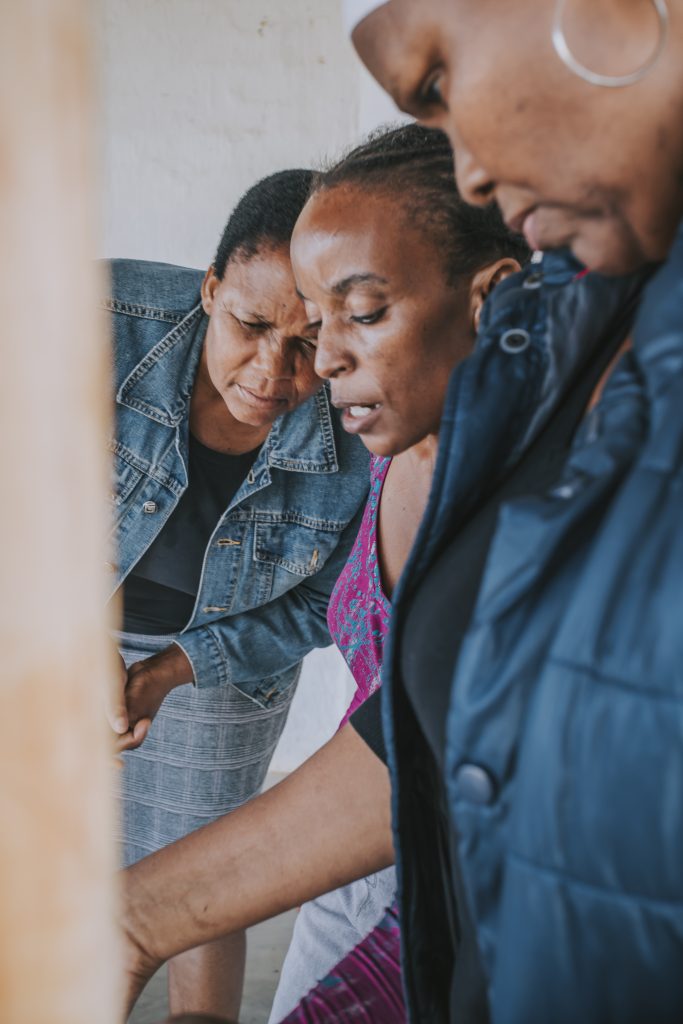
The future of Mapusha's work depends on experienced weavers, committed learners and development support with clearly defined responsibilities, valuing knowledge holders as central partners.

Heritage Craft Group
Mapusha Weavers
Future Learners
Emerging Makers

Development & Market Support
Kulani Collective
Every artisan name & portrait shown publicly is used with written consent.
Goals
What the project set out to achieve.
- iPreserve weaving knowledge through a paid, structured intergenerational programme led by experienced Mapusha artisans.
- iiStrengthen governance, shared accountability, stock control and production planning so the cooperative can operate more consistently.
- iiiImprove quality-control processes and product consistency without removing the handmade character of the work.
- ivDevelop contemporary products that respond to real markets while respecting Mapusha's heritage, techniques and creative ownership.
- vConnect fibre, preparation, natural dyes, weaving processes and individual makers through practical traceability records.
- viRebuild dependable access to tourism, retail and wholesale markets on the basis of confirmed capacity, pricing and fulfilment.
Impact
What the relationship has put in place and clarified to date
- iMapusha's studio hosted Kulani's first community craft programme and became an early anchor for local skills development.
- iiExperienced artisans created an entry point for participants who wanted to progress from introductory fibre skills into weaving.
- iiiThe relationship generated practical lessons about governance, accountability, stock control and the connection between quality and market trust.
- ivMapusha products gained exposure through Kulani-linked retail and market opportunities, while also revealing the need for consistent supply systems.
- vThe work helped define a future model in which senior weavers are paid teachers and younger makers follow a structured learning pathway.
- viThe cooperative remains part of Kulani's wider artisan network, and any new training phase should be presented as planned work until it is formally funded.
Traceability & Transparency
A textile can carry the history of its fibre, maker and place.
Future Mapusha products should record the maker, technique, fibre source, dye process and cooperative story.
This creates a stronger basis for pricing, customer understanding and preservation of intangible craft knowledge.

Traceability Stamp
Proposed traceability fields: maker, fibre, spinning method, dye process, loom or technique, completion date and cooperative.
Keep Exploring
Related projects.

— Project 03
WELVERDIEND, MPUMALANGA, SOUTH AFRICA
Vugimamusi Arts and Crafts Technical Assistance and Market Linkage
Twelve women strengthening sisal craft, business capability and routes to market through two connected development phases.
Explore the project →
— Project 04
ORPEN GATE, GREATER KRUGER, MPUMALANGA
Orpen Hub Community Retail Partnership
A conservation-linked retail space connecting regional products, community enterprise and one of the Greater Kruger's most important tourism routes.
Explore the project →Walk with this project